| 5 Green Mount Terrace, Rochdale Road, Harpurhey, Manchester, Lancashire 📍 ⓘ1881 Census
Ref: 3892/40/13
Birth Certificate 📎 Birth Cert |
🏠Lived (3)1871 🏛️ Bank Holidays introduced | 7 Regent Terrace, Hall Street, Moston, Manchester, Lancashire 📍 📎 Census |
| 9 Johnson Street, Cheetham Hill, Manchester, Lancashire 📍 |
| Fern Bank, 30 Burlington Road, Withington, Manchester, Lancashire 📍 ⓘ1881 Census
Ref: 3892/40/13 📎 Census |
| Scholar ⓘ1881 Census
Ref: 3892/40/13 |
| Manchester Grammar School, Old Hall Lane, Manchester, Lancashire, M14 6HL 📍Email from archives@mgs.org of 14/09/2018: Sidney Osborn Tattersall was at MGS for one year in 1883 in the Lower Third Form studying Classics, Divinity, French and Drawing. We have no admissions registers for this period, so information is really thin unfortunately. We don’t even have proper biographical information such as date of birth or address. |
🏠Lived (23)1891 🏛️ Free elementary education | 10 Napin Road, Chorlton-Cum-Hardy, Manchester, Lancashire 📍 📎 Census |
| Clerk |
| Headingley College, Leeds, West Yorkshire 📍 |
💼Occupation (27)1895 🏛️ National Trust founded | Wesleyan Minister (Start of Probabtion) ⓘMethodist Who's Who |
⛪Ordination (31)31/07/1899 🏛️ Second Boer War | Wesleyan Chapel, Great Queen Street, London, Greater London 📍
Methodist Minister ⓘNewspaper Clipping 📎 DocumentTHE WESLEYAN CONFERENCE. THE ORDINATION SERVICE.
LONDON, MONDAY EVENING.
The Conference did not meet for routine business until this afternoon. The morning was occupied by the ordination service. Under the present arrangements this service is held upon the Monday in the third week of the Conference, and is invariably the most popular of all the services to which the public are admitted. This year the demand for tickets has been largely in excess of the supply. The service was held in Great … THE WESLEYAN CONFERENCE. THE ORDINATION SERVICE.
LONDON, MONDAY EVENING.
The Conference did not meet for routine business until this afternoon. The morning was occupied by the ordination service. Under the present arrangements this service is held upon the Monday in the third week of the Conference, and is invariably the most popular of all the services to which the public are admitted. This year the demand for tickets has been largely in excess of the supply. The service was held in Great Queen-street Chapel, and at a very early hour this morning Methodists from Greater London turned their steps thitherward. The immense chapel, which has two galleries, was filled in every part.
The following young ministers, who have passed through a full course of training in the Connexional Colleges, completed four years' probation in circuit work, and successfully passed all the preliminary examinations, were solemnly set apart by the laying on of hands for the work of the Christian ministry in the Wesleyan Methodist Church:—Cecil Frederick Groom, Edwin Charles Lansdown, Robert Rogers, Albert Woolley, William Henry Lax, Charles Ensor Walters, Edward Grainger, Richard Ernest Little, Sidney Osborn Tattersall, Sidney Harris, George Braithwaite Miller, Arthur Clay Lywood, Edgar Coleman Palmer, Walter Ernest Rees, Francis Woodmass, Frederick George Howland, John Henry Sanders, Richard Kennedy, James Herbert Watson, Vernon Wills, Henry Rule Glanville, Ernest James Padfield, Tom Henry Fenn, Trevor Hughes Davies, Frank Edwards, John Wesley Hart, Robert Sims Armsby, B.A., James Fielding, William Frederick Flemington, Thomas Walton Meredith, Arthur Thomas Burbridge, B.A., Andrew Fletcher Robb, John Davison Brown, Charles Ryder Smith, B.A., Stanley Malvern Butters, B.A., Joseph Manning, John William Allcock, John Hannah, John Raine Longstaff, Robert Alfred Taylor, Joseph Hudson Kay, George Henry Bainbridge, Hermann Stephenson, John William Harrison, Ernest Sayer Edis, John Mee, and Joseph Short.
The President conducted the service and was assisted by a number of ex-presidents and the Secretary of the Conference, and the following ex-presidents and senior ministers:—The Rev. Hugh Price Hughes, Dr. Randles, the Rev. Walford Green, the Rev. Richard Roberts, Dr. Sellors (New South Wales), the Rev. C. H. Crookshanks, M.A. (Ireland), the Rev. Joseph Bush, the Rev. C. H. Kelly, Dr. Fitchett (Tasmania), the Rev. John Smith, the Rev. W. D. Walters, the Rev. Andrew Palmer, and the Rev. Charles H. Burbridge, the last four ministers taking part in the ordination of their own sons. At the close of the ordination service the candidates received the Holy Communion.
The charge to the newly ordained ministers was given by the ex-President, the Rev. Hugh Price Hughes, and was based upon I. Corinthians i. 17, "Christ sent me not to baptise but to preach the Gospel." He reminded the candidates that they had just been ordained to the greatest ministry on earth, and he prayed that they might in that ministry glorify God with all their heart. To some minds to-day the words of Paul might seem strange, but they needed to remember that their first and highest duty was to preach the Gospel. During his visit to Florence he found that in 80 churches in that lovely city there was no preaching except during Lent, and then only in a few denominations. Now their marching orders, like Paul's, were first of all to preach the Gospel. Edward Irving was right when he said the pulpit was the preacher's throne. They were now in some quarters and by some people called pastors as distinct from preachers, but he reminded them that their original name, given to them by John Wesley, was not pastors nor ministers but Methodist preachers; and their buildings were not originally called churches nor chapels, but preaching-houses. He would tell them most solemnly, if they could not preach, whatever else they might do they had missed their calling, and had no business in the Methodist ministry. Some people were saying to-day that there was no difference between the minister and the godly layman; but he assured them that they, like Paul, were called to be preachers in a different sense from the layman. He entirely agreed with the late Dr. Dale that the men who were called to this office had special qualification for the office given unto them; and by the grace of God he was able to testify that such gifts had been given to him. Further, the true preacher would have a supernatural passion for souls, and God gave them a divine power of persuasion so that men were converted by their preaching. There were men who were capable of writing sermons which might run through several editions who could not preach.—(Hear, hear.) When they ascended the pulpit it was like the magistrate reading the Riot Act. They dispersed the congregations.—(Laughter.) They were in the position of a barrister addressing a jury, and their business was to win a verdict for Jesus Christ. If a man could bring sinners to Christ, that was the true test of his ability to preach. He was in the true apostolic succession. Then there was a sense in which they did not need to aim to instruct people. There were many subjects upon which the people needed instruction that they had better leave to those who could do it better.—(Laughter.) They only needed to instruct them in so far as it was necessary to win them to Christ. When they understood this they would see how absurd it was for a man to read his sermons. The barrister never read his address to the jury, and for the same reason a man was not allowed to read his speech in the House of Commons. They were men of action, and when they wanted men to act they did not read to them a discourse. Could they imagine Oliver Cromwell reading his addresses to the House of Commons?—(Laughter.) The great preachers who had moved the nations had not read their sermons—such men as Whitfield, Wesley, Luther, and St. Francis of Assisi. He begged them to keep up this great succession.—(Hear, hear.) He believed Dr. Dale greatly damaged his ministry by reading his sermons. This was illustrated by several passages from Dr. Dale's life. Continuing, the ex-President said: "Whatever you do, keep to the point. Do not be tedious. If you cannot win your verdict in half an hour you cannot win it at all.—(Hear.) Beware of those who tell you that if certain theories prevail there is an end of Christianity. These theories have prevailed, and yet the people believe in the Bible and religion more and more.—(Applause.) Your first step, then, is to bring living sinners to the living Christ. The second step is to bring living Christians to the living Church. Jesus Christ did not come into the world merely to save the individual, but to found a Church."—(Hear, hear.) The deadliest dogma of anarchism (he continued) was that religion was something between God and the individual, and had nothing whatever to do with society. In the beginning they read that 3,000 were added to the Church. The Church was not merely a heap of disconnected atoms. It was a living organism. That was the difference between Whitfield and Wesley. Whitfield believed in sowing the seed broadcast, and to-day the organisation was represented by less than 50 churches. Wesley, on the other hand, wherever he found three or four converted, banded them together and placed one at the head of them, and called him the leader, and to-day his followers were counted by millions. When the Pope had delivered his judgment refusing to recognise the orders of the English Church someone said to Lord Halifax, "What will you say now?" He answered, "Brethren, we know that we have been blessed when we have met together, when we had received comfort and salvation." That was a beautiful answer.—(Hear.) It was a truly Methodist answer. It was the answer they gave to Lord Halifax. He used it to cut the head off the Pope, but they could use it just as well to cut his head off.—(Laughter.) True notes of the real Church were baptism and the frequent participation in the Lord's Supper. After defining and illustrating these points at length, he said the third and last point was, they must preach the Kingdom of God. The Church herself was not an end, but a means to an end. They must keep that end in view. They must not only change men, but they must change their environment. He quite agreed with Dr. Fairbairn in his last book, that it is the duty of the Church to create a state in which charity should not be needed and crime should be unknown.—(Applause.) Closing, he begged them never to dabble in party politics, but to be faithful to the great trust which had been committed to them as servants of the Lord Jesus Christ and His Church.
EVENING SESSION.
The Conference assembled at four o'clock and proceeded to the discussion of the stations. The following changes were made:— Holt: George E. Startup vice Alfred Garland. Blackpool: Alfred Wells vice Thomas M. Dickinson. Buxton (Devonshire Park): William Done (supernumerary). The Conference again adjourned.
THE WESLEYAN CONFERENCE AND THE LIQUOR TRADE.
To the Editor of the Manchester Guardian.
Sir,—Although the Conference refrained from passing a resolution couched in somewhat drastic terms the opinion of a large minority cannot be ignored; and will, if fairly put before the public, gather strength and importance. Few people seem to appreciate the significance of brewers and distillers turning their concerns into limited companies, for the fact cannot be ignored that owing to this circumstance the real ownership of such undertakings rests in a large section of the community, and the influence in opposition to a reform of the licensing laws is increased a thousand-fold.—Yours, &c.,
31st July, 1899. LIBERAL CHURCHMAN. Show more |
🏠Lived (33)1901 🏛️ Death of Queen Victoria | 127 Cromwell Road, Bristol, Gloucestershire 📍 ⓘ1901 Census 📎 CensusThe 1901 Census lists him as a lodger of Elizabeth Lemon aged 54. Beatrice Woodward aged 16 also lived in the house as a General Domestic Servant |
| Wesleyan Minister ⓘ1901 Census |
| 113 Spot Road, Cardiff, Glamorganshire 📍 ⓘDeath Civil Registration Index
He was the informant on the death certificate of his father, James Tattersall |
🏠Lived (40)1908 🏛️ Old Age Pensions introduced | 12 Trinity Road, Handsforth, Birmingham, West Midlands 📍 ⓘElectoral Roll 📎 Image |
🏠Lived (43)1911 🏛️ National Insurance Act | 86 Silver Street, Edmonton, London, Middlesex 📍 📎 Census |
🏠Lived (47)1915 🏛️ First World War | 86 Silver Street, Edmonton, London, Middlesex 📍 |
💼Occupation (48)23/09/1916 🏛️ Battle of the Somme | Minister in charge of the Rochdale Wesleyan Mission as superintendent of the Union Street Mission circuit ⓘNewspaper Clipping 📎 Newspaper |
| Edith Maud LOCKWOOD
Trinity Wesleyan Chapel, Coltman Street, Hull, East Yorkshire 📍 ⓘMarriage Civil Registration Index
Newspaper Clipping 📎 Image 📎 ImageINTERESTING WEST HULL WEDDING.
The wedding took place this afternoon at the Wesleyan Church, Coltman-street, of Miss E. M. Lockwood (younger daughter of the late Mr Joseph Lockwood, of this city) and the Rev S. O. Tattersall, of Rochdale. The bride has many intimate associations with Coltman-street Church. For several years, prior to her leaving Hull for Brough, she took an active interest in the Sunday School and in other branches of the work, and has also been a keen worker on behalf of the … INTERESTING WEST HULL WEDDING.
The wedding took place this afternoon at the Wesleyan Church, Coltman-street, of Miss E. M. Lockwood (younger daughter of the late Mr Joseph Lockwood, of this city) and the Rev S. O. Tattersall, of Rochdale. The bride has many intimate associations with Coltman-street Church. For several years, prior to her leaving Hull for Brough, she took an active interest in the Sunday School and in other branches of the work, and has also been a keen worker on behalf of the Hull Guild of Brave Poor Things.
The bridegroom was the first minister of the well-known Edmonton Central Hall, London. After six years there he went to Rochdale as superintendent of the Wesleyan Mission.
The bride was given away by her brother, Mr J. P. Lockwood, Barrister-at-law, and was accompanied by her niece, Miss Enid Lockwood, as bridesmaid. The Rev E. J. W. Harvey, M.A., was the best man, and the service was conducted by the Rev Ernest Rhodes, assisted by the Rev Howard Watkin-Jones, M.A., and Mr J. Soulsby, A.R.C.O. was at the organ. The numerous friends of the bride and bridegroom sent many handsome and useful presents. A reception was afterwards held at the home of the bride "Glenville," Brough, the residence of her aunt, Mrs Mountain. Later in the day the bride and bridegroom left for the Lake District.
[Hull Daily Mail, 24 April 1917] Show more |
🏠Lived (53)1921 🏛️ Irish Free State established | 44 Hartington Street, Barrow in Furness, Lancashire 📍 ⓘ1921 Census 📎 Census |
🏠Lived (65)1933 🏛️ Great Depression | 59 Bannister Street, Withernsea, Hull, East Yorkshire 📍
with Edith Maud LOCKWOOD |
🏠Lived (71)1939 🏛️ Second World War | 24 The Link, Anlaby Park, Kingston-Upon-Hull, East Yorkshire 📍
with Edith Maud LOCKWOOD ⓘ1939 NHS Register 📎 1939 Register |
| 📎 Will |
🏠Lived (72)1940 🏛️ Battle of Britain | 24 The Link, Anlaby Park, Kingston-Upon-Hull, East Yorkshire 📍
with Edith Maud LOCKWOOD ⓘDeath Certificate |
| Methodist Minister ⓘDeath Certificate |
| 96 Westbourne Avenue, Kingston-Upon-Hull, East Yorkshire 📍
1 (a) Cerebral Thrombosis (b) Prostatectomy (c) Benign enlargement of Prostate ⓘDeath Civil Registration Index
Ref: Hull 9d 645 📎 Death CertDeath Notice in Hull Daily Mail Thursday February 15th 1940 Tattersall, February 13th after an operation. Sidney Osborn Tattersall of 24 The Link, Anlaby Park, beloved husband of Edith Tattersall. Service at Methodist Chapel, Anlaby Common, Hull on Friday next at 2pm. Internment at The General Cemetery at 3pm. Request no mourning. |
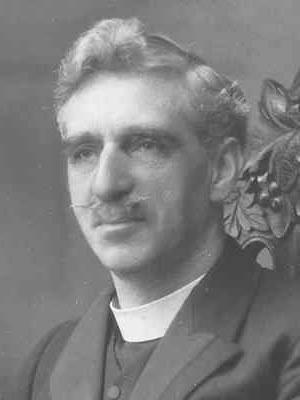
| Methodist Chapel, Anlaby Common, Hull, East Yorkshire 📍Obituary from Minutes of The Methodist Conference 1940 SIDNEY OSBORN TATTERSALL: born at Manchester on September 28, 1868 and educated at the Grammar School of that city. The example and influence of a godly mother led him to surrender his life to the service of Christ. Accepted as a candidate for the Ministry in 1892, he was trained at Headlingley College. For forty years he upheld the highest traditions of ministry and when he retired from the active work, he continued to find his supreme … Obituary from Minutes of The Methodist Conference 1940 SIDNEY OSBORN TATTERSALL: born at Manchester on September 28, 1868 and educated at the Grammar School of that city. The example and influence of a godly mother led him to surrender his life to the service of Christ. Accepted as a candidate for the Ministry in 1892, he was trained at Headlingley College. For forty years he upheld the highest traditions of ministry and when he retired from the active work, he continued to find his supreme joy in proclaiming the gospel of Christ his saviour. He loved the Church of his choice with a great love and served it with ceaseless devotion. As a colleague he was the soul of loyalty; as a superintendent, wise and capable; as a preacher, passionately evangelistic, and as a pastor, tireless in his devotion. The secret of his success was an all-absorbing love for his Lord, the assiduous reading of good books, and the constant cultivation of his own religious life. After a brief illness, he passed to the homeland on February 13, 1940, in the seventy-second year of his age and the forty-fifth of his ministry. Show more |
| Hull General Cemetery, Spring Bank West, Hull, East Yorkshire 📍
Grave: 6729 Compartment: 63Cemetery Records Burial No: 51926 Grave: 6729 Compartment: 63
Date of Death 13th February 1940
Burial 16th February 1940 Paid By: University J. Lancaster
Aged 72 at death, Retired Methodist Minister
Address: 24 The Link, Anlaby Park
Died At: 96 Westbourne Avenue
Funeral Directors: A. Shepherd & Son, Brunswich Avenue, Beverley Road, Hull Monumental Inscription
No headstone at the grave as it had collapsed and was broken. In Loving Memory
Elizabeth the beloved wife of Joseph Lockwood
who … Cemetery Records Burial No: 51926 Grave: 6729 Compartment: 63
Date of Death 13th February 1940
Burial 16th February 1940 Paid By: University J. Lancaster
Aged 72 at death, Retired Methodist Minister
Address: 24 The Link, Anlaby Park
Died At: 96 Westbourne Avenue
Funeral Directors: A. Shepherd & Son, Brunswich Avenue, Beverley Road, Hull Monumental Inscription
No headstone at the grave as it had collapsed and was broken. In Loving Memory
Elizabeth the beloved wife of Joseph Lockwood
who died October 18th 1895 aged 58 years
he giveth the beloved sleep also
Joseph Lockwood husband of the above
who died November 24th 1906 aged 66 years
rest in the lord also
Helen Gertrude Lockwood
daughter of the above
who died October 10th 1920 aged 49 years also
John Percival Lockwood
son of the above
who died January 5th 1925 aged 51 years Reverend Sidney Osborn Tattersall
Methodist Minister
died 13th February 1940 aged 72 and
Edith Maud Tattersall
nee Lockwood
died November 1st 1940 aged 60 The Grave Ledger shows Joseph Lockwood grave for three. The Hull General Cemetery was originally owned by a private company until falling into disrepair and was taken over by the local authority in the 1970's. The records are held at Hull Archives t. 01482 615102 e. city.acrchives@hullcc.gov.uk Show more |
| York, North Yorkshire 📍
Effects: £4445 5s 1d 📎 Probate 📎 ProbateSidney Osborn Tattersall of 24 The Link, Anlaby Park, Kingston-Upon-Hull died 13 February 1940 at 96 Westbourne Avenue, Kingston-Upon-Hull Probate: York 15 March to Maurice Victor Gosschalk Solicitor Marcus Edward Rainsford Brockman retired methodist minister and Edith Maud Tattersall widow Effects: £4445 5s 1d |