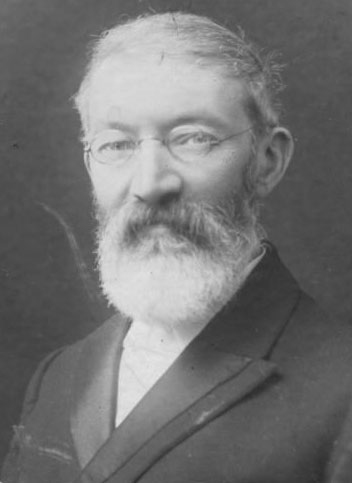
Primitive Methodist Magazine 1872
Connexional Biography (Pages 360 - 363)
John Rylands University Library of Manchester
John Sadler
The subject of the following sketch, late of Huxley, in the Chester circuit, was born at Huxley, near Chester, May 17th, 1806, and at a very early age was taken by the kindest and best of fathers, to the house of God, and was privileged to listen to honoured Wesleyan ministers. He was the subject of early and powerful religious impressions, which eventuated in his conversion to God when he had just passed his thirteenth birthday. His own words shall furnish the account of his conversion, and we think they will be found interesting, inasmuch as they touch on the early history of Primitive Methodism and its introduction to his native village.
"In the month of June, 1819, just as the Wesleyan Methodists had withdrawn their services from the neighbourhood, a Primitive Methodist missionary, named Sampson Turner, with a few pious friends, entered my native village one fine summer evening, singing, 'Turn to the Lord and seek salvation,' &c.; after missioning the place in this fashion, they came to a stand-still for a short time, exactly opposite the site where the Primitive Methodist Jubilee Chapel now stands, and very near to my father's farm-yard gate. My father then stepped forward, and addressed that revered man God, whose name is dear to my memory,--'This yard and these premises belong to me, and if you think fit to occupy any part of them you are at liberty to do so, and I will help you to something to stand upon.' At this intimation the preacher and his few friends entered the yard, and under the shades of several stately elms which stood near the house, he mounted a strong stool for a pulpit, and after singing and prayer announced at his text- 'Enter ye in at the strait gate,' &c. Matt. Vii. 13, 14. The word came with power, and in the prayer-meeting which followed, I felt as I had never done before; I was miserable in the extreme, and that night I was afraid to close me eyes in sleep, lest I should aware in hell. My convictions of sin were deep and keen, I prayed and wrestled; I read, and tried every means I could think of to secure peace and happiness, when presently a strange sensation came over me. I said, what is this? The thought instantly crossed my mind, 'The Lord hath pardoned thy sins.' I could have leaped, and jumped, and run, like one bereft of reason. I felt as light as a feather. But oh! now I look back to that period with heartfelt gratitude to God for his great mercy to me; it was the turning point in my life. I had just attained my thirteenth year."
A class was formed, at Huxley, by Thomas Brownsword, who was employed to mission those parts, and brother Sadler, with his father, mother, and other members of his family, joined the infant cause. This was in the year 1819, nine years after the formation of the Connexion, and from that time to the time of his death, 1871, he remained a steady, firm, and consistent member of the Connexion. The old farm house became at once a home for the preachers and a sanctuary for religious services; his father became leader of the society, which in a very short time numbered twenty-four members. A great religious awakening took place through the surrounding district, a powerful revival visited the country, and great numbers were added to the infant cause, and this formed the nucleus of what are now the Chester and Buckley circuits. And can we wonder at such grand results attending the efforts of these early missionaries when we are told that "the first pioneers of Primitive Methodism in these parts were Sampson Turner, John Brownsword, and his sister Ann Brownsword, Job Gibson, John Garner, John Wedgwood, Hugh Bourne, and James Bourne," names associated with all that is so truly brave and good, and though unknown to the bards, sculptors, and historians of these times, yet dear to the heart of the Church, and written in God's imperishable book of fame.
Tracing our brother Sadler through the ordinary routine of farm life for the space of the next ten years, in which we maintains his integrity as a follower of Christ, we arrive at the year 1829, when he was united in marriage to his cousin Elizabeth; the year following he removed to Brook Cottage, Huxley, a small farm, where he, assisted by his dear wife, taught a day school. Here he witnessed some gracious outpourings of the Devine Spirit, and numerous conversations; he established prayer-meetings and class-meetings in his house, was appointed leader of the same, "And many," says he, "were the gracious manifestations we experienced in that lonely cottage." In the year 1832, his name appeared in the circuit plan, and from that time to the period of his removal from us, he sustained the office of local preacher with credit to himself, and honour to his station.
He continued at the cottage until the spring of the year 1834, when he removed to Clotton Hoofield, an adjacent farm, where he continued "diligent in business, fervent in spirit, serving the Lord," until the spring of 1838, when the offer of the old homestead at Huxley was made to him, which he gladly accepted, the domestic and religious associations of the place rendering it to him the most attractive spot on earth. Now he thought his measure of happiness was well-nigh full, when in reality he was only beginning in earnest to fight the battle of life. In reference to this part of his life, his journal contains the following passage:- "I now felt myself at home, sheltered under the roof where I first beheld the light. How contented, comfortable, and happy we seemed, apparently settled for life. Oh, what short-sighted creatures we are; how uncertain are all earthly hopes and anticipations! Little did I think what lay before me. When I review this portion of my life my heart seems to sink within me, and I cry out, 'Thy waves and thy billows have gone over me.' Losses, crosses, trials, and bereavements of no ordinary kind have been my lot." Here Mrs, Sadler's health broke down, and though she had the benefit of not less that nine medical men she continued to decline month by month until the year 1842. She fell asleep in Jesus in her thirty-fourth year, after a peaceful, wedded life of a little over eleven years. This was a sad stroke to our brother, and tried his Christian graces as gold is tried in the furnace; but through faith in the Divine mercy he stood the test, and glorified God in the conflict. But this seemed to be but the beginning of that chequered life which continued till near the end of his days. In 1842, he found himself a widower with three small children, and the entire management of a farm of 120 acres; to say that it was no trial of his faith would be gratuitous libel on the tender sensibilities of our common humanity. He did feel, and keenly too; but he sought and found solace and encouragement where good men in similar circumstances had found it before - at the throne of grace. Immediately succeeding the loss of the mother of his children another calamity overtook him, in the form of a fatal epidemic among his cattle, which striped him of almost all he had. Early in the year 1843, the disease swept away his horned cattle, and before the messenger had well departed, there came another with the direful news that his horses were smitten, and these too were taken in one short week. And now he stands and surveys his position and, like Jacob, with a full heart he is ready to exclaim, "All these things are against me," He says, "Though in me perplexity I was frequently laying my cause before him who knoweth all things, still at times I felt it hard to say, 'Thy will be done.'"
After due deliberation and prayer, he again gathers some hope, and in a manly spirit sets himself to retrieve his losses. In this he somewhat succeeded, by the blessing of God, and things again began to look prosperous. During these sunnier days he deemed it allowable for domestic and other considerations to marry a second time. This event took place in February, 1845. His second wife he found every way adapted to fulfil the duties of a wife and a mother: hence we find him saying, towards the end of life, that he had never once had cause to regret this step. This union proved a very happy one to him and all his relations, but he had not yet learned all his Father's will. He was destined again to pass under the rod, for in a very short time after the marriage a disease known as the "pleura," broker out in his stock, and took a goodly portion of the best of his cattle; and again in 1859 it made its appearance, and subjected him to a similar trial but on a larger scale: and now we find him, though cast down, not forsaken; though perplexed, not destroyed. Nor does he despair, but with the calmness and fortitude of true manliness, supported by the higher principles of Christianity, he struggles to recover himself the third time, and again he succeeds. And now he enjoyed a few years of comparative calm and prosperity until the ever memorable year of 1866, when that terrible complaint known as the "Cattle plague" made its appearance, by which many who had been in circumstances of comparative independence were sunk into positive indigence. Brother Sadler was not exempt from this visitation.
The following is his own account of this fearful scourge, its effects on his property, his own sentiments and action in the midst if it, and previous losses:- "Just as all things appeared prosperous with me, and I had regained my full stock, which never before were more promising, and I was making my way well, that never-to-be-forgotten year, 1866, arrived, when the "rinderpest" swept through the land like a mighty torrent, and thousands of horned cattle fell victims to its ravages. It broke out among my dairy stock, and in about five weeks we buried in one grave twenty-eight head of cattle valued at between £400 and £500. Surely this has been a wilderness world to me. I am indeed a wonder to myself. But amid all my ups and downs in life, I don't know that I have ever wilfully neglected a single preaching appointment, and I have now been - at the time I am writing (1868), thirty-five years a local preacher, thirty-five years a class-leader, and forty-nine years a member of the Primitive Methodist Connexion. And on a close examination of myself, I feel nature still clings to wife and children, to everything else I could gladly bid adieu, and leave the world with pleasurable satisfaction."
About this time his health began to decline, and serious fears were entertained of his recovery. He retired from the farm at Huxley, and went to reside at Kelsall, and though his path was smooth, and his sky brighter, his somewhat stalwart frame was prostrated by a severe and protracted affliction, as to be reduction to a comparative skeleton. Contrary, however, to general expectation, he was brought back from the very verge of the grave; and so marked was the change in his system that sanguine hopes were entertained that he might be spared for some time to prosecute his much-loved work of beseeching men to be reconciled to God. The last time I saw him was at the house of a mutual friend, and I shall not soon forget the glowing animation that lit up his countenance as he spoke of his work, and gave us a short recital of his purposed mode of prosecuting it during the coming summer months; and, as I looked at the veteran soldier bearing so many marks of suffering - so many scars of the conflict, reaching out into the future with such glowing anticipations of braver combat and nobler triumph, my impressions were of a peculiar, though pleasurable kind; but, alas for human hopes and anticipations, though their objects be purely philanthropic and nobly grand, like the flower nipped in the bud, they often die in the hour of their birth. But a few weeks passed from the time referred to ere the intelligence was communicated that brother Sadler was no more; reposing in hopes of salvation in the finished work of his exalted Saviour, he entered into rest November 15th, 1871, in the sixty-fifth year of his age, the fifty-second of his membership, thirty-eight of which were spent in the capacity of local preacher, and class leader.
As a Christian, so far as we know him, he was most consistent; his light was clear and steady, one of liberal sentiment, and intelligent piety; though a stanch Primitive Methodist he was no narrow bigot, or cramped sectarian, but could freely fraternise and heartily co-operate with other Christians who did not pronounce the Shibboleth of his church. That he had faults there can be no doubt; this is the common heritage of humanity - weakness attaches to all; the fairest characters have their stains, but in no case can I particularize, as I do not happen to know what were the peculiar mental or moral ailments of our departed brother. This is know - that among those who have known him the longest, there is united testimony to his moral worth, and though with him life was a warfare, and it seemed to be his Father's will for him "perfect through suffering," and lead him to the kingdom "through much tribulation," yet he bravely endured, "as seeing him who is invisible," until life's mission was accomplished, and he ascended the mount of vision to read clearer light the gracious end and purpose of life's painful lessons. By his removal from us, the church has lost an exemplary Christian; a prudent, judicious official; and earnest labourer; a sound theologian, and a faithful, earnest, and practical preacher; his wife one of the most considerate and affectionate husband's, and his family one of the best of fathers. May they and we follow him as he followed Christ, that when our warfare is accomplished, we may rejoin him in the paradise of God.
J. T. Higgins
Extract from "A History of Hargrave and Huxley". Published by the Hargrave and Huxley Historical Group in 1988. Printed by Handbridge (offset) Printing Service Ltd. ISBN 0 9513776 0 4. Unfortunately the book is out of print, but a copy was very kindly lent to me by Mrs Marjorie Pritchard.
Chapels - page 39
The Trustees appointed for the Methodist Jubilee Chapel in 1st March 1860 were John Sadler, Farmer; John Bennett, Gentleman; George Pearce, Sadler; Joseph Benson, Farmer, all from Huxley and James Sadler, Farmer from Newton; John Sadler, Farmer from Houghton Moss; William Bateman, Corn Factor, Kelsall; William Lee, Farmer from Clotton Hoofield, Ephraim Sadler, Glass dealer from Eccles Manchester.
A biography of John Sadler gives an insight into religious, family and farming life in Huxley in the early 19th century. He was born in Huxley on 17th May 1806 and was introduced to Methodism at an early age. He is quoted as saying "In June 1819, just as the Wesleyan Methodist has withdrawn their services from the neighbourhood, a Primitive Methodist missionary, named Sampson Turner, came exactly opposite the site where the Primitive Methodist Jubilee Chapel now stands and very near to my father's farmyard gate. My father offered the use of his yard and under the shade of several stately elms which stood near the house the preacher mounted a strong stool for a pulpit". The subsequent prayer meeting "was the turning point in my life. I had just attained my thirteenth birthday". From that time on "he remained a steady, firm and consistent member of the Connexion". The old farmhouse became a home for the preachers and a sanctuary for religious services; his father became leader of the society and it is said that a great religious revival ensued.
In 1829 John was married to his cousin Elizabeth and the next year he moved to Brook Cottage, a small farm, where he, assisted by his wife, taught a day school "and many were the gracious manifestations we experienced in that lonely cottage". They moved in 1834 to a farm at Clotton Hoofield and in the Spring of 1838 they returned to Elm Tree Farm where "I now felt myself at home, sheltered under the roof where I first beheld the light". But his wife's health broke down and despite the attention of nine medical men she died in 1842 leaving John with three children. (Waverton Church records give a son, Ephraim, baptised on 3rd April 1831 and a daughter Elizabeth baptised on 15th September 1833) (The 1841 census also gives Frances aged 3).
He now had the whole of the work on his 120 acre farm to do as well as his religious activities. (The 1841 census shows that he has two young male servants and two young female servants living in). Early in 1843 there was a fatal epidemic amongst his cattle, quickly followed by one which killed all his horses in a week. The biography related how, after due deliberation and prayer, he once again prospered and that he remarried in February 1845. (In the 1851 census his wife is given as Martha born in Gorstage and he had another three children John [4], Albert Edward [3] and Thomas [1]). But his problems were not at an end and shortly after his marriage a disease known as the 'pleura' broke out and took "a goodly portion of his best cattle", and again on 1859 it made its appearance on a larger scale. After this he enjoyed a few years of comparative calm and prosperity until 1866 "when the 'rinderpest' swept through the land like a mighty torrent and thousands of horned stock fell victim to its ravages. It broke out amongst my dairy stock, and in about five weeks we buried in one grave twenty eight head of cattle valued at between £400 and £500". After this his health declined; he retired to Kelsall where he died on 15th November 1871, aged 65, and in his fifty second year of membership of the Methodists including 38 years as a local preacher and class leader. [Note: His gravestone records death in March aged 64]
Reference: The Primitive Methodist Magazine, 1872
Elm Tree Farm - page 80
This farm near the road junction in Huxley is now owned and occupied by Mr and Mrs Edgar Newport who farm it with their son K. Rodney Newport; he lives with his wife Jane and their two children on Roseneath cottage adjacent to the farm. The farm is of 74 acres with a further 34 acres near Tarporley and 30 acres rented on the other side of the Gowy. The main farming is based on beef cattle, sheep and pigs.
In 1784 John Crew owned the land around the farmhouse and in 1802 ownership passed to the Aldersey family. Other lands were with the Wilbraham family. The farm has increased in size by 1804 and 1811. In 1902 the Rev. E.W. Henstock purchased the farm and it passed to his son J.H,T. Henstock, a chemist. The farm was bought in 1928 by Robert C. Bate who sold it to Miss Lois P. Prestwich of Tirley Garth, a daughter of the manufacturer of Burberry waterproofs. Mr Newport purchased the farm in 1951.
William Sadler (senior) was the occupier in 1784 to about 1800, followed by his son Ephraim Sadler who was tenant to about 1819. According to the '1746' Hargrave Register "William, son of Ephraim and Ann his wife of Huxley, farmer, was baptised on March 28th 1813". This appears to have been an adult baptism because in June 1819 William Sadler (jnr) was the tenant of Elm Tree Farm. He was still there in 1838 when the owner was Samuel Aldersey and there were 119 acres mainly pasture but with some wheat and oats and a small area of potatoes. Only two fields totalling 5 acres were mown. There were 3 cottages (4 dwellings) on the farm. From the spring on 1838 William's son John occupied the house. He had married his cousin Elizabeth in 1829, but she died in 1842 and John remarried in February 1845. (See Chapels chapter for an account of the life of John Sadler). John was in occupation until ill health forced him to retire to Kelsall where he died in November 1871.
The tenancy of the farm, by now 97 acres, then passed to John Lloyd Lightfoot, a son of John Lightfoot, farmer of 84 acres, probably Lower Farm. By 1871 John Sadler's son, Thomas, had returned to the farm now reduced to 80 acres. Henstock, whose son died young and whose name is on the font in Huxley church, farmed here for a while and he built Elm Tree Cottages. Subsequently a Mr Oultram and by 1914 Thomas Dale, who lost two sons in World Was I, were here. Robert C. Bate was farming here from 1928 until 1945.
The farm took its name from the trees formerly in the drive and at the rear. The latter had been cut down by 1945 to enlarge a field. Of the two elms by the entrance gate, one was accidentally burnt down and the other was infected by Dutch Elm disease and was cut down with others in the drive. The diameter of this stump is about 1 metre. Two ponds at the rear were the only source of water in 1945 when the well ran dry and Mr Newport carried water in milk churns from the pond to the cows. Drinking water came along a pipe from Wright's yard. An artesian well sunk in 1946 is still in use today. A horse wash is buried under the implement shed at the side of the drive.
The Farmers Arms - page 82
It exchanged hands again this time to Ephraim Sadler, farmer of Elm Tree Farm (q.v.). In 1838 William Parkinson was the tenant of the public house and the associated three acres and it was still owned by Ephraim Sadler, who now lived in Great Saughall.
it was bought in 1842 by a Brewer from Chester, Robert Turner