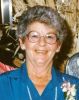
| 🪦 Burial | 20 Feb 1997 (105) | Hautapu Cemetery, Cambridge, North Island, New Zealand 📍Notes from Peter Moore:
At my grandmother's funeral, a member from each generation was asked to give a Eulogy. I was asked on behalf of the grandchildren to speak. What follows is an unedited transcript.
"FAREWELL TO AN OLD FRIEND"
Good morning, my name is Peter and I am one of the grandchildren. Yes, I now need glasses, and my hair has started to go grey even my generation is growing older. When I was asked to speak about my grandmother, I felt honoured.
After 38,063 days Sigrid Ingyard Bri… Notes from Peter Moore:
At my grandmother's funeral, a member from each generation was asked to give a Eulogy. I was asked on behalf of the grandchildren to speak. What follows is an unedited transcript.
"FAREWELL TO AN OLD FRIEND"
Good morning, my name is Peter and I am one of the grandchildren. Yes, I now need glasses, and my hair has started to go grey even my generation is growing older. When I was asked to speak about my grandmother, I felt honoured.
After 38,063 days Sigrid Ingyard Brickland is dead.
I will not attempt to verbalise your personal feelings or love for Sigrid. Those are personal for you as sons, daughters, grandchildren, great grandchildren etc. However I will attempt to give you a brief insight into the life and times in which Sigrid lived.
Born 28th November 1892 in Stillwater Minnesota, Sigrid grew into an attractive daughter for Carl and Anna Christine Sandahl.
Three years before her birth George Eastmann developed his Kodak camera, perhaps in anticipation of Sigrid's entrance to this world. This was not the only invention or development that was happening at the time.
Andre and Eduoard Michelin were developing the pneumatic tyre for automobiles, probably to ensure that Sigrid would have a smooth ride through her life. King C. Gillette in 1895 developed the safety razor giving the young men who would soon be knocking on the Sandahl's door time to perfect the art of a smooth face. Tchaikovsky died the year after Grandma was born, leaving her with music to dance the many dances of her later years. The Wright Bros waited until Sigrid was aged 11 and at school before they launched their new fangled flying machine off the ground at Kittyhawk in 1903.
When Sigrid was 17 her father moved the family to Canada in search of work. It was here that she developed a love for, and learnt to play the guitar and piano; this was complimented by her two brothers on saxophone.
Her two brothers went on to form a band and Sigrid was left to go on and develop an interest in boys. It was at about this time that Sigrid's life started to become hectic.
Following her father's love of dancing, combined with her natural beauty and magnificent dresses and hats made by her aunts, Sigrid would have attracted a fair share of attention at the local dances. However, she once told me, with a twinkle in her eye that it was her father who escorted her to the dances, always had the first dance, and always escorted her home. I wonder how many smooth faced young men went home alone with broken hearts and undeveloped Kodak film in their pockets.
The description of Sigrid's gay life is reinforced by the number of articles written up in the "Chase Tribune", a newspaper that she worked on as a typesetter for four years. The articles (none of which I have with me today) takes one back through history as the sounds of the bells on a one horse sleigh ring through the snow covered Canadian countryside. You can feel the laughter of the young occupants echoing across the frozen ice of Sushwop Lake as our old friend grows into a young woman.
Even ten years ago, grandma was able to recount the personalities of her young friends mentioned in the newspaper articles. Articles written some 70 years previous. It was during this carefree time of her life, coming down the Thompson River that Sigrid had her first sighting of Halley's Comet. Grandma told me "at first we all thought it was a large white cloud with a long tail, we hadn't been told to expect a comet" after having seen it a second time, some 76 years later in 1986 she told me "it was a bit of a fizzer really , you should have seen it last time!" I wonder how many astronomers would pay a small fortune to have that experience.
The arrival into town of a young Police Constable named Harry Brickland was to herald an entire new age for Sigrid , and is one of the reasons why we are gathered here in NZ today, for Harry Brickland, as all of you know was to marry Sigrid on Wednesday, April 8th 1914 .
Harry's family wanted him back in NZ. with his new bride. Sigrid's family (Swedish immigrants in a new land) wanted their only daughter to remain in Canada. After two children and pregnant with a third, Sigrid joined with her husband and returned to N.Z. The return however was only for Harry; Sigrid was sailing into the unknown.
The life and times of Sigrid through many a King Country winter can be best told by her children. They were hard times for a slightly built Swedish-American bride and raising ten children is a tribute in itself to her courage and love.
From the King Country they retired to Cambridge where all of my generation will recall the trade off of raking up walnut tree leaves in exchange for a pocket or two full of walnuts. It is in Cambridge around the lunch table that I recall grandma never eating fresh bread. Her explanation was "fresh bread is bad for the digestive system and one will live longer without it " how can one argue against that theory with someone who lived 104 years and 81 days.
To Sigrid Ingyard Sandahl, daughter, sister, lover, wife, mother, grandmother, great grandmother, great great grandmother, friend and companion, we now say to you: "God Bless and Farewell Old Friend".
Peter Moore 20th Feb 1997 Show more |